

You want the best bedroom ceiling fan for a restful sleep and a comfortable space. Start by matching the fan size to your room dimensions. Proper sizing improves air circulation and energy efficiency. Quiet operation matters, especially in bedrooms. Choose lighting that suits your needs and enhances ambiance.
When you select a fan with the right blade span diameter, you prevent inadequate airflow and avoid wasting energy. Blade pitch and motor efficiency also impact performance. Follow these steps to create a peaceful, stylish bedroom.
Key Takeaways
Measure your bedroom accurately to choose the right ceiling fan size. Proper sizing ensures effective airflow and energy efficiency.
Select a fan with a DC motor for quiet operation and energy savings. DC motors are quieter and consume less energy than AC motors.
Consider integrated lighting for a seamless look or add-on kits for flexibility. Choose lighting that matches your needs and enhances your bedroom's ambiance.
Use the right mounting type based on your ceiling height. Flush mounts work for low ceilings, while downrod fans suit higher ceilings for better airflow.
Prioritize energy-efficient features like LED lights and smart controls. These options save money and improve comfort in your bedroom.
How to Choose the Best Bedroom Ceiling Fan
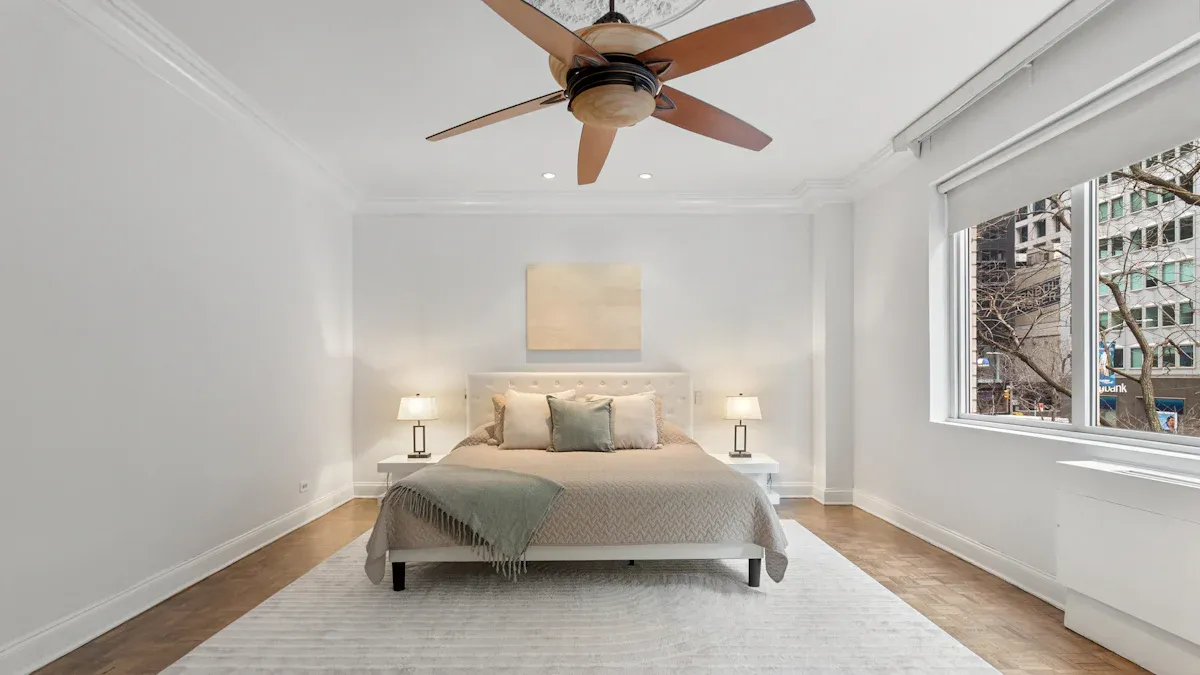
Room Measurement Basics
To select the best bedroom ceiling fan, you must start with accurate room measurements. This step ensures you match the fan size to your space for optimal airflow and comfort. Follow these steps:
Measure the length and width of your bedroom in feet.
Multiply these numbers to calculate the square footage. For example, a room that is 12 feet by 14 feet equals 168 square feet.
Note the ceiling height. Standard bedrooms usually have ceilings between 8 and 9 feet.
Tip: Always measure the longest side of your room if your bedroom is not a perfect rectangle. This helps you choose a fan that covers the entire space.
Fan Size Guide
Choosing the correct fan size is essential for comfort and efficiency. A fan that is too small will not circulate air effectively, while an oversized fan can create drafts and overwhelm the space. Use the table below to match your bedroom size to the recommended fan blade span:
Bedroom Size |
Recommended Fan Size |
|---|---|
Small Bedrooms (Up to 100 sq. ft.) |
42-inch blade span or smaller |
Standard Bedrooms (100 - 175 sq. ft.) |
44 to 52 inches |
Large Master Bedrooms (175 - 350 sq. ft.) |
52 to 60 inches |
Expansive Suites (Over 350 sq. ft.) |
Oversized model for maximum airflow |
Larger rooms require fans with longer blades for effective air circulation.
Small rooms with oversized fans can create uncomfortable drafts.
Using appropriately sized fans ensures optimal airflow without overwhelming the space.
If your bedroom falls between two sizes, choose the larger fan for better air movement. This approach helps you achieve the best bedroom ceiling fan performance for restful sleep and energy savings.
Ceiling Height Tips
Ceiling height plays a critical role in both safety and airflow. You must position the fan blades at the ideal height for maximum comfort. The recommended blade height is between 8 and 9 feet above the floor. This range allows for unobstructed airflow and keeps the fan safely out of reach.
Consider these mounting options based on your ceiling height:
Ceiling Height |
Recommended Mounting Option |
Description |
|---|---|---|
8 feet or higher |
Standard mount fan |
Uses a downrod to drop the fan into the open air for effective airflow. |
Under 8 feet |
Hugger fan |
Hugs the ceiling for safe clearance, ideal for low ceilings but with slightly less airflow. |
For ceilings 8 feet or higher, use a standard mount fan with an appropriate downrod.
For ceilings under 8 feet, opt for a hugger fan to ensure safe clearance.
For ceilings over 9 feet, you may need a longer downrod to maintain the optimal blade height.
Note: The U.S. Department of Energy recommends positioning ceiling fans 8–9 feet above the floor for the best airflow and safety.
By following these steps, you ensure your best bedroom ceiling fan delivers quiet, efficient, and comfortable airflow tailored to your space.
Quiet Performance & Airflow
DC vs. AC Motors
You should prioritize DC motors when searching for the best bedroom ceiling fan. DC motors operate more quietly than AC motors, which is essential for a restful sleep environment. They achieve this quietness because they do not use brushes, reducing friction and noise. DC motors also consume up to 70% less energy than AC motors, making them a smart choice for lowering your utility bills. You will benefit from their durability, as they have fewer moving parts that can wear out. DC fans often provide more speed settings, giving you precise control over airflow and comfort.
Tip: Choose a DC motor ceiling fan for your bedroom if you want silent operation, energy savings, and long-term reliability.
Blade Design & Airflow
Blade design plays a major role in both airflow efficiency and noise production. You should look for fans with well-designed blades that balance shape, pitch, and number. A blade pitch between 12 and 15 degrees usually offers the best mix of air movement and quiet operation. The shape of the blade affects how air moves through the room and can help minimize noise. More blades can sometimes mean quieter performance, but the overall design matters most.
Select a fan with a balanced blade pitch for efficient airflow.
Consider the number and shape of blades for reduced noise.
Look for manufacturers that highlight quiet blade engineering.
Noise Ratings
Noise ratings are critical when choosing a ceiling fan for your bedroom. Fans that exceed 35 decibels can disrupt deep REM sleep, so you should always check the manufacturer’s specifications. Many brands list noise levels in their product details. If you have a larger fan, you can run it at a lower speed to further reduce noise while maintaining airflow.
Note: Always compare noise ratings before making your final decision. A quiet fan will help you create a peaceful and comfortable bedroom.
By focusing on these features, you ensure your best bedroom ceiling fan delivers quiet, efficient airflow for a restful night.
Bedroom Fan Lighting Options
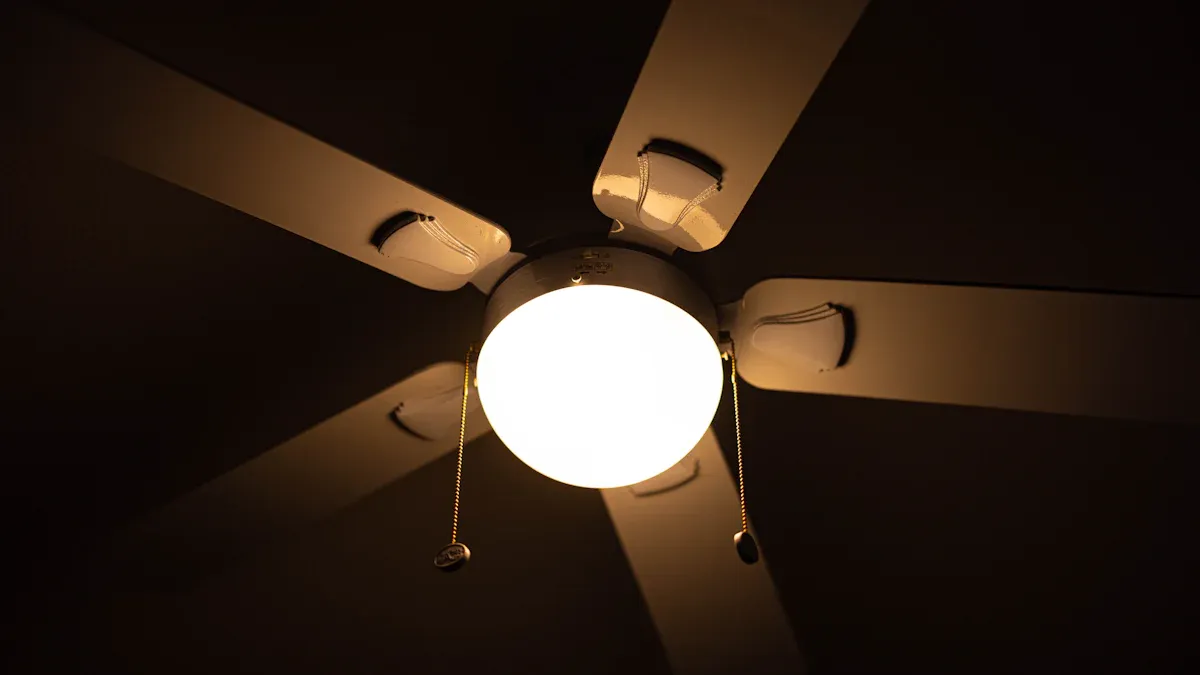
Integrated vs. Add-On Lights
You must decide between integrated and add-on light kits when selecting lighting for your bedroom ceiling fan. Integrated light kits are built directly into the fan. This design creates a seamless look and combines air circulation with lighting from a single fixture. You benefit from space-saving and essential illumination, especially if the fan serves as your primary light source. Add-on light kits attach to fans without built-in lighting. This option gives you flexibility if you already have sufficient lighting or want to customize your setup. You can enhance your fan’s functionality based on your specific needs and existing room conditions.
Tip: Choose integrated lighting for a cleaner design and primary illumination. Select add-on kits if you want to adjust lighting later or supplement existing fixtures.
Bulb Types & Brightness
Selecting the right bulb type impacts energy efficiency, brightness, and comfort. LED bulbs offer the highest efficiency, using up to 75% less energy than traditional incandescent bulbs. You also gain a longer lifespan—LEDs last 25 times longer and produce less heat, which improves the cooling effect of your fan. CFL bulbs provide moderate efficiency and lifespan, while incandescent bulbs deliver standard brightness but consume more energy.
Bulb Type |
Energy Efficiency |
Lifespan |
Brightness Comparison |
|---|---|---|---|
LED |
Up to 75% less |
25 times longer |
Higher than incandescent |
Incandescent |
Standard |
Shorter lifespan |
Standard brightness |
You should select adjustable brightness settings to match your activities. Reading requires brighter light, while relaxing or sleeping benefits from softer illumination. Variable color temperature options allow you to create the right mood for your bedroom.
Lighting Controls
Lighting controls enhance convenience and comfort in your bedroom. Dimming functionality lets you adjust brightness, saving energy and extending bulb life. Smart home integration allows you to program lighting schedules and make remote adjustments. Remote control functionality gives you easy access from anywhere in the room.
Feature |
Benefit |
|---|---|
Dimming functionality |
Adjusts brightness for energy savings and bulb longevity. |
Smart home integration |
Allows programming of lighting schedules and remote adjustments. |
Remote control functionality |
Provides ease of use from anywhere in the room, enhancing comfort. |
You create a personalized lighting experience by combining these features. When you select the Best Bedroom Ceiling Fan, consider lighting options that match your comfort and style needs.
Installation & Control Tips
Mounting Types
You must select the right mounting type for your bedroom ceiling fan to ensure safety and optimal airflow. The choice depends on your ceiling height and room size.
Flush mount fans work best in rooms with ceilings under 8 feet. They provide enough clearance and prevent obstruction, making them ideal for smaller spaces.
Downrod fans suit larger bedrooms and higher ceilings. They position the blades further from the ceiling, improving air distribution and enhancing the room’s aesthetics.
Angled mounts accommodate sloped ceilings, ensuring the fan hangs level and operates smoothly.
Always use a UL-rated electrical box for safe installation. Anchor the fan to a ceiling joist and check blade alignment. If the fan wobbles, use a balancing kit.
Challenge |
Solution |
|---|---|
Balancing the Fan Blades |
Use a balancing kit to adjust blade weights for smooth operation. |
Height Adjustments for Performance |
Install the fan 8-9 feet from the floor; use an extension rod for high ceilings. |
Structural Concerns |
Ensure the electrical box can support the fan's weight; reinforce if necessary. |
Electrical Wiring Complications |
Verify correct wiring connections; consider hiring a professional if unsure. |
Remote & Smart Controls
Modern bedroom ceiling fans offer advanced control options that increase convenience and comfort.
Remote controls allow you to adjust fan speed and lighting from anywhere in the room.
Smart controls integrate with home automation systems like Amazon Alexa or Google Home. You can manage settings through voice commands or mobile apps.
You can schedule the fan to turn on before bedtime or use occupancy sensors for automatic operation.
Motion-based features and temperature sensors optimize energy use and comfort.
Smart fans make adjustments easy and enhance user-friendliness. You gain flexibility and can customize airflow and lighting to suit your needs.
Energy Efficiency
Energy efficiency features help you save money and reduce environmental impact. Look for these options:
Feature |
Description |
|---|---|
Lighting options |
Choose fans with built-in LED lights or kits for energy efficiency. |
Control types |
Options include smart controls, which enhance usability and efficiency. |
Speeds and reversibility |
Fans with multiple speeds and reversible motors offer year-round use. |
ENERGY STAR certified |
Fans that meet ENERGY STAR standards are significantly more efficient. |
Efficient lighting options, such as integrated LEDs, lower electricity consumption and minimize waste.
ENERGY STAR certified fans can save you $20 to $40 annually on energy bills. They are up to 70% more efficient than conventional models.
Smart controls and occupancy sensors further reduce energy use by turning the fan off when the room is empty.
Prioritize these features to maximize comfort, convenience, and savings in your bedroom.
You can create a comfortable, stylish bedroom by following a few essential steps. Measure your room, select the right fan size, and prioritize a quiet DC motor. Choose lighting that fits your needs for both function and ambiance. High-quality fans offer energy efficiency, improved air circulation, and long-lasting performance.
Quiet operation and integrated LED lighting enhance sleep quality and convenience.
Fan Size |
Room Size |
Room Type |
|---|---|---|
42″ |
up to 100 sq. ft. |
Bedroom, Office |
A well-chosen ceiling fan elevates both comfort and aesthetics in your space.
FAQ
How do you clean a bedroom ceiling fan safely?
Turn off the fan and use a sturdy step stool. Wipe blades with a microfiber cloth or use a vacuum with a brush attachment. Avoid spraying liquid directly on the fan. Clean regularly to prevent dust buildup and maintain air quality.
Can you install a ceiling fan without existing wiring?
You need electrical wiring in place. If your bedroom lacks wiring, hire a licensed electrician. This ensures safety and code compliance. Never attempt to run new wiring yourself unless you have proper training.
What is the best way to reduce ceiling fan wobble?
Check that all screws and blade brackets are tight. Use a balancing kit if the fan still wobbles. Make sure the fan mounts securely to a ceiling joist. Proper installation prevents most wobble issues.
Should you run your bedroom ceiling fan in winter?
Yes, reverse the fan direction to clockwise. This pushes warm air down and improves comfort. Use the lowest speed setting for best results. Many fans have a switch on the motor housing for this function.
How do you choose the right color or finish for your fan?
Match the fan finish to your bedroom décor. Neutral colors blend easily, while bold finishes create a focal point. Consider existing hardware and lighting fixtures for a cohesive look. You can request finish samples from many manufacturers.
Share:
Brighten Your Home: Modern Wall Lights to Transform Any Space in 2025
Which Cabin Lighting Style Fits You Best