
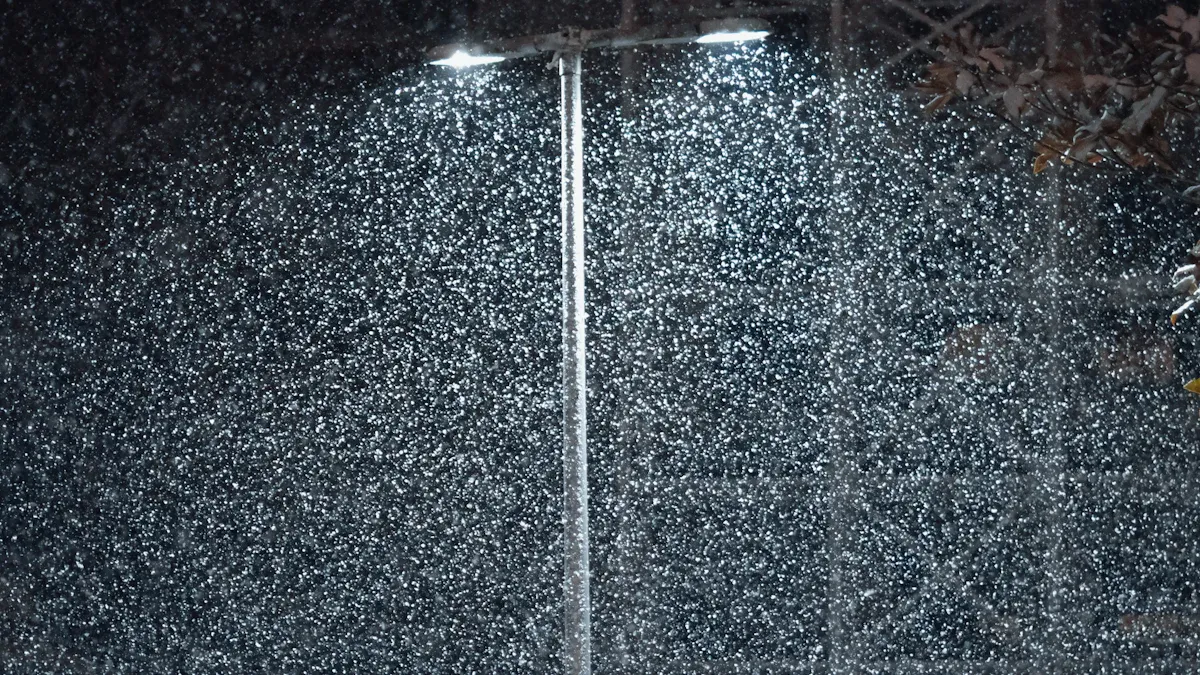
Navigate winter storms with confidence using these essential tips. Discover how to enhance safety and visibility in snow with durable, weather-resistant outdoor lights. Explore the 7 Tips for Picking the Best Outdoor Light for Snowstorms to keep your property illuminated and secure during harsh conditions!
You face unique challenges when choosing outdoor lights for harsh winter conditions. Snow and ice demand more than basic illumination. Weather-resistant features and weatherproof designs help you keep your property safe and visible. Cold-weather-resistant outdoor lights built from durable materials withstand harsh winter and freezing temperatures. Recent research shows that LED lights with a cold white output improve visibility in snow by 40% and reduce accidents by 35% in winter weather. The table below highlights how the best outdoor light for snowstorm improves safety and reliability.
Evidence Description |
Outcome |
|---|---|
LED lights emitting 5000K–6000K cold white light cut through snow fog 40% more effectively than warm-toned alternatives. |
Improved visibility in snowy conditions |
Accidents dropped 35% post-LED adoption on Colorado’s I-70 mountain corridor. |
Enhanced safety during winter storms |
LED brake lights activate 0.2 seconds faster than incandescent lights. |
Critical for reaction times on icy roads |
LED pole fixtures maintained 100% uptime during 2023’s “Bomb Cyclone.” |
Reliability in extreme weather conditions |
Focus on IP/UL ratings, material quality, and bulb type when choosing outdoor lights for harsh winter conditions.
Key Takeaways
Choose outdoor lights with an IP65 rating or higher to ensure they resist snow, ice, and water.
Select LED lights for winter as they provide instant brightness and perform well in freezing temperatures.
Use outdoor-specific fixtures made from durable materials like stainless steel to withstand harsh winter conditions.
Plan the installation of lights carefully to maximize coverage and prevent slip hazards around your property.
Regularly clear snow and ice from fixtures to maintain visibility and safety during winter storms.
Choose the Best Outdoor Light for Snowstorm
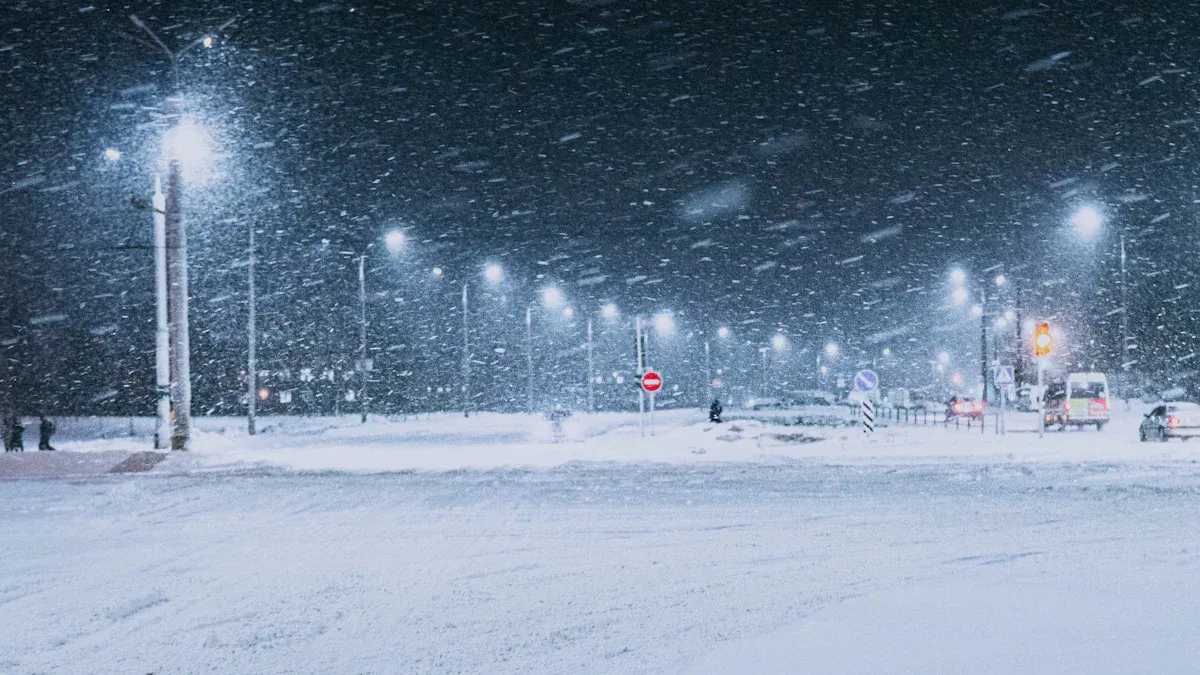
Check IP and UL Ratings
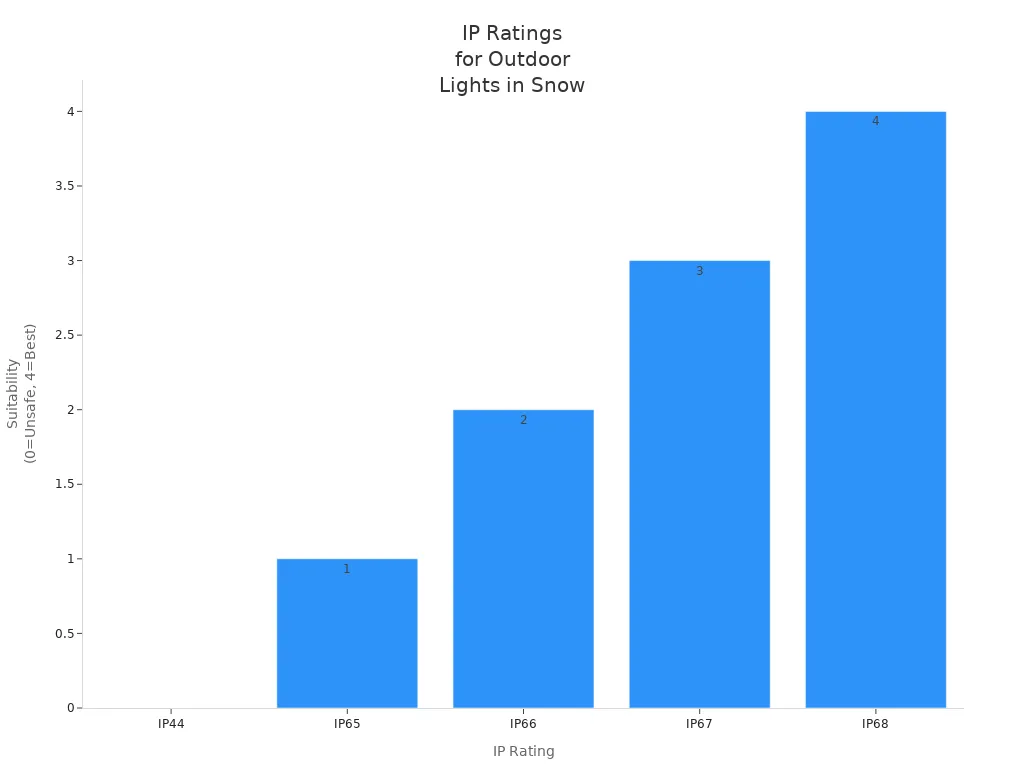
You need to pay close attention to IP and UL ratings when choosing outdoor lights for snowstorm conditions. These ratings tell you how well your outdoor post lights can resist dust, water, and harsh weather. For the best outdoor light for snowstorm, always look for an IP65 rating or higher. This ensures your outdoor post lights stay protected from snow, ice, and even water jets. The table below shows how different IP ratings compare for snowy climates:
IP Rating |
Solids Protection |
Liquids Protection |
Real-World Suitability for Snowy Climates |
|---|---|---|---|
IP44 |
Protected from solid objects >1 mm |
Protected from water splashed from any direction |
❌ Unsafe for snow conditions |
IP65 |
Dust-tight |
Protected against low-pressure water jets |
✅ Minimum acceptable for snow accumulation |
IP66 |
Dust-tight |
Protected against powerful water jets |
✅ Recommended for heavy snowmelt |
IP67 |
Dust-tight |
Protected against immersion in 1 m of water |
✅ Ideal for ground-level installations |
IP68 |
Dust-tight |
Protected against continuous immersion |
✅ Overkill but essential for certain installations |
UL wet ratings are just as important. These ratings confirm that your outdoor post lights can handle direct exposure to snow and rain. If you skip these ratings, you risk electrical failures and safety hazards. Many people make the mistake of using lights not rated for wet conditions, which leads to moisture buildup and damage.
Opt for Outdoor-Specific Fixtures
You should always select fixtures labeled for outdoor use. Outdoor post lights designed for exterior environments have advanced sealing systems and corrosion-resistant materials. These features keep your outdoor post lights working through snow, ice, and freezing temperatures. Indoor fixtures cannot handle moisture or temperature swings. They often fail when exposed to winter weather.
Consider these key differences:
Feature |
Indoor Fixtures |
Outdoor Fixtures |
|---|---|---|
Moisture Resistance |
Not designed for moisture exposure |
Designed to withstand moisture |
Temperature Tolerance |
Limited tolerance to temperature changes |
Built to handle temperature fluctuations |
Safety in Weather Conditions |
Higher risk of electrical hazards |
Safer due to weatherproof designs |
Outdoor post lights are engineered for direct exposure to snow and rain.
They prevent electrical hazards and equipment failure.
Using the best outdoor light for snowstorm means you avoid common mistakes like electrical failures, damage from snow removal, and rapid deterioration.
When choosing outdoor lights, focus on outdoor lighting fixtures that can withstand snowstorms. Outdoor post lights with the right ratings and materials will keep your property safe and visible all winter.
Pick LED Lights for Winter
LED Performance in Cold Weather
You need reliable lighting when winter weather hits hard. Led lights deliver consistent performance even in freezing temperatures. Unlike fluorescent bulbs, which lose brightness and struggle to start in the cold, led lights turn on instantly and maintain full brightness. This instant illumination helps you see clearly and react quickly during snowstorms.
Tip: Led lights do not require heat to start, so you avoid delays and flickering in subzero conditions.
The table below compares how different bulb types perform in cold climates:
Bulb Type |
Minimum Operating Temperature |
Performance in Cold Conditions |
|---|---|---|
LED |
-40 degrees Celsius |
Operates well and turns on instantaneously |
Fluorescent |
50-60 degrees Fahrenheit |
Performance degrades significantly in cold |
Incandescent |
Not specified |
Generally less effective in extreme cold |
Led lights maintain high light output and efficacy, making them ideal for outdoor use in winter. Their durability means you replace bulbs less often, saving time and money.
Energy Efficiency and Lifespan
Led lights offer significant advantages in energy savings and longevity. You can save up to 80% more energy compared to traditional incandescent bulbs, which lowers your electricity bills throughout the season. Led lights also perform better in cold temperatures, maintaining about 5% more efficiency than other lighting options.
Led lights have a lifespan ranging from 15,000 to 50,000 hours, depending on quality and usage.
They do not contain toxic elements, making them safer for your environment.
Minimal heat production reduces fire hazards and increases safety around snow and ice.
Advantage |
Description |
|---|---|
Energy Efficiency |
Led lights consume significantly less electricity compared to traditional bulbs, leading to lower energy bills. |
Performance in Cold Weather |
Led lights provide full brightness instantly in cold temperatures, unlike traditional bulbs that may struggle. |
Safety Benefits |
Led lights produce minimal heat, reducing fire hazards and increasing safety around combustible materials. |
Eco-Friendliness |
Led lights do not contain toxic elements and have a longer lifecycle, resulting in less waste. |
You improve visibility and safety around your property when you choose led lights for outdoor lighting during winter weather. Enhanced lighting deters trespassers and helps prevent slips and falls on icy surfaces.
Focus on Outdoor Lights for Cold Climates
Durable Materials Like Stainless Steel
You need to prioritize quality when selecting outdoor lights for cold climates. Snow and ice can quickly degrade fixtures made from inferior materials. High-quality construction ensures your outdoor lights for cold climates withstand repeated freeze-thaw cycles and harsh winter weather. Stainless steel stands out as a top choice because it resists rust and corrosion, even when exposed to moisture and salt. Brass also performs well, developing a protective patina that increases its resistance to the elements. Advanced polymer composites offer another reliable option, maintaining their structure and color despite UV exposure and temperature swings.
Material |
Properties |
|---|---|
Marine-grade stainless steel |
Exceptional corrosion resistance, withstands salt, moisture, and temperature variations. |
Brass |
Develops a protective patina that enhances weather resistance over time. |
Advanced polymer composites |
Incorporate UV-inhibiting compounds, maintaining structural integrity and color stability. |
Tip: Quality matters more than size or output. You want outdoor lights for cold climates that keep working during blizzards, not just the brightest fixture.
Powder-Coated and Rust-Resistant Finishes
You should look for powder-coated and rust-resistant finishes when choosing outdoor lights for cold climates. These finishes protect fixtures from snow and ice, extending their lifespan and maintaining their appearance. Powder coating that meets AAMA 2604 or 2605 standards resists fading, chalking, and corrosion, even in extreme environments. Sealed construction prevents moisture from entering, while powder-coated surfaces resist chipping and wear.
Powder-coated finishes help prevent rust and corrosion.
Sealed designs block moisture and ice from damaging internal components.
Quality finishes ensure your outdoor lighting remains reliable through many winters.
You invest in long-term performance and safety when you choose outdoor lights for cold climates made from durable materials and protected by advanced finishes. This approach keeps your property well-lit and secure, no matter how severe the snow or ice becomes.
Consider Color Temperature
Avoid Glare on Snow
You want your outdoor lighting to improve visibility, not create harsh glare. Snow reflects up to 90% of the light that hits it. This high reflectivity can cause discomfort and even temporary vision loss if you use the wrong color temperature. Cool white LEDs in the 5000K–6500K range emit blue-rich light. When this light hits snow, it scatters and creates a stark, almost blinding brightness. This effect can make it harder to see steps, walkways, or obstacles hidden under ice.
Tip: Choose lighting that reduces glare to keep your property safer and more comfortable during winter storms.
Warm white LEDs (2700K–3000K) produce a softer glow. They enhance shadow definition and help reduce glare, but they may not provide enough clarity for outdoor tasks in snowy conditions. You need to balance comfort and visibility.
Choose Neutral White for Visibility
You achieve the best results by selecting neutral white light for your outdoor fixtures. The ideal color temperature for outdoor lighting in snowy conditions falls between 4100K and 5000K. This range offers a bright, cool white light that cuts through snow and improves visibility without overwhelming your eyes.
Neutral white light helps you see walkways, driveways, and entrances clearly.
It provides enough contrast to spot icy patches or obstacles.
This color temperature supports both safety and comfort for you and your guests.
When you pick the right color temperature, you create a well-lit environment that keeps your property safe and welcoming, even during the harshest winter nights.
Plan Installation and Placement
Maximize Coverage and Safety
You improve safety and visibility around your property when you plan the installation and placement of outdoor lights with care. Proper coverage ensures that walkways, driveways, and entry points remain illuminated during winter weather. You reduce the risk of slips and falls by keeping these areas well-lit. Place fixtures at regular intervals to eliminate dark spots and shadows. Use waterproof wire connectors and sealed fixtures to manage moisture and frost. Avoid using de-icing chemicals or rock salt near your lights, as these substances can cause corrosion and shorten the lifespan of your fixtures.
Tip: Regularly check the alignment of your fixtures after freeze-thaw cycles. Misaligned lights can expose wiring and reduce coverage.
The following table outlines common winter hazards and protective actions you can take:
Winter Hazard |
Potential Damage |
Protective Action |
|---|---|---|
Heavy Snowfall |
Buried fixtures, broken stems, damaged wiring |
Gently clear snow with a broom. Mark fixture locations with flags. |
Ice & Sleet |
Obscured lenses, potential moisture ingress |
Ensure fixture seals are tight. Let fixture heat melt light ice. |
Frost Heave |
Misaligned fixtures, exposed wiring |
Check alignment after freeze-thaw cycles. Re-secure fixtures if needed. |
Keeping your outdoor lighting system operational during winter is crucial for safety and security. The gentle heat from the fixtures can help prevent snow and ice accumulation on the lenses.
Prevent Snow Buildup on Fixtures
You maintain consistent illumination by preventing snow buildup on your outdoor lights. Heated lenses offer a practical solution, as they stop snow and ice from accumulating on important fixtures. Ice-phobic coatings also help by reducing the strength of ice adhesion, making it less likely for snow to stick. Strategic positioning plays a key role. Install lights under eaves or awnings to shield them from severe weather and enhance their effectiveness.
Heated lenses keep fixtures clear and bright.
Ice-phobic coatings make cleaning easier and reduce maintenance.
Positioning lights under protective structures increases longevity and reliability.
You ensure your outdoor lights perform reliably throughout the season when you combine smart placement with advanced features. This approach keeps your property safe and well-lit, even during the harshest winter storms.
Add Safety Features
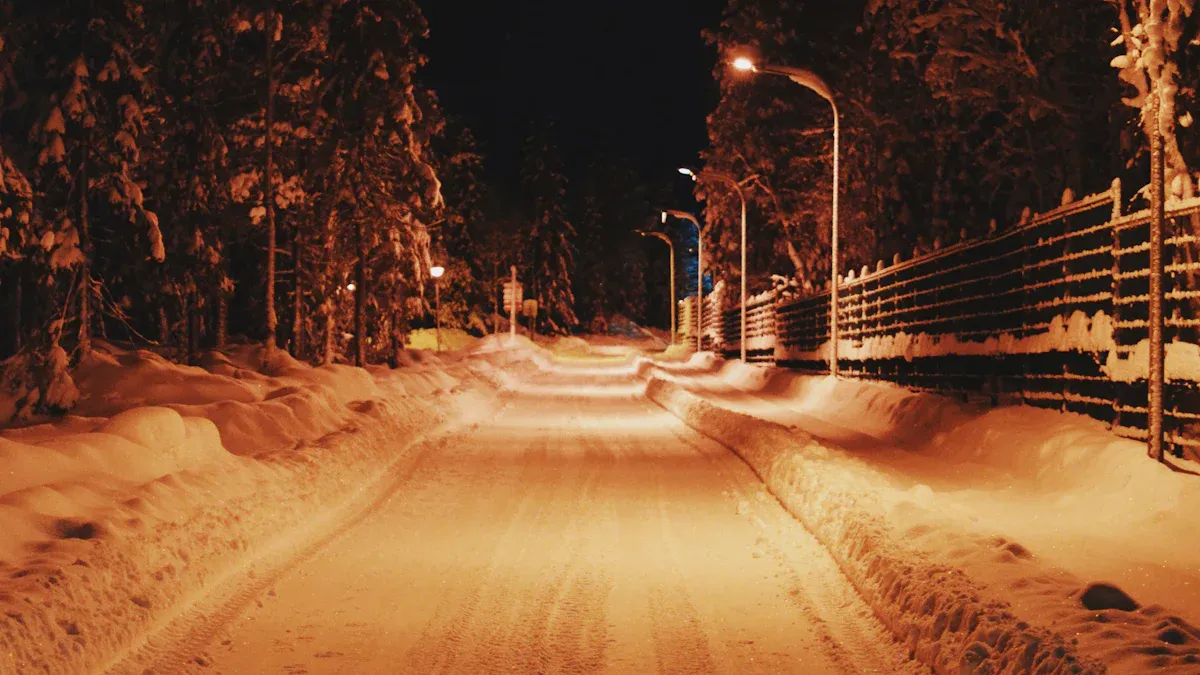
GFCI Protection
You must prioritize electrical safety when installing outdoor lighting for snowstorms. Ground Fault Circuit Interrupter (GFCI) outlets play a critical role in protecting you and your family from electrical shock. These outlets detect imbalances in electrical current and immediately cut off power if they sense a problem. This quick response—often within milliseconds—prevents dangerous shocks, especially in wet or snowy conditions where the risk increases.
GFCI outlets monitor electrical flow and interrupt the circuit if moisture or snow causes a fault.
You gain peace of mind knowing that GFCI protection works even during heavy snow or ice storms.
These outlets are essential for any outdoor installation exposed to water or melting snow.
You should also inspect your fixtures for cracks and corrosion. Pay close attention to seals, as they prevent moisture from entering the system. Use outdoor-rated silicone sealant to reinforce these seals. Always check that wires are buried properly and that transformers and GFCI outlets remain securely mounted and functional.
Anti-Slip and Anti-Ice Design
You can reduce slip hazards by focusing on anti-slip and anti-ice design features around your outdoor lights. Weather-sealed fixtures and durable materials help your lights withstand harsh winter conditions. Proper wiring ensures safety and reliability, even when snow piles up.
A study by the National Safety Council reports that slip-related injuries increase by 30% in winter. Keeping landscape lighting clear ensures proper visibility for driveways, walkways, and entry paths.
Follow these steps to keep your outdoor lighting safe and effective:
Regularly clear snow and ice from fixtures with a soft broom or cloth.
Gently brush snow off after major storms to maintain light output.
Remove ice buildup around in-ground and path fixtures to prevent overheating.
You improve safety and visibility by maintaining your outdoor lights and choosing designs that resist ice accumulation. This approach keeps your property accessible and secure throughout the winter season.
Make Maintenance Simple
Easy Access for Cleaning
You need to keep your outdoor lights clean to maintain their performance during snowstorms. Snow and ice can block light output and reduce visibility. Clear pathways around your fixtures help you reach them quickly for maintenance, especially when snow piles up. You should remove snow and ice from fixtures regularly to prevent damage and keep your lights working at full brightness.
Keep pathways around fixtures clear for easy access during maintenance.
Clean solar panels often to prevent snow buildup and ensure effective charging.
Follow manufacturer guidelines for safe cleaning practices, especially for solar-powered lights.
Tip: Use a soft cloth or broom to gently remove snow and ice from your fixtures. Avoid using sharp tools that could scratch or damage the surface.
Weatherproofing your fixtures with outdoor-rated extension cords and covers helps protect them from moisture. Sealing gaps with silicone sealant prevents water from entering and causing electrical issues. These steps make cleaning easier and extend the life of your outdoor lights.
Quick Bulb Replacement
You save time and effort by choosing fixtures that allow quick bulb replacement. LED bulbs work best in cold weather because they last longer and use less energy than traditional bulbs. You should switch to LED bulbs before winter starts, since cold temperatures can wear down other types faster.
Use LED bulbs for outdoor fixtures to maximize lifespan and energy efficiency.
Change bulbs before winter to avoid failures during snowstorms.
Select fixtures with easy-access designs so you can replace bulbs without special tools.
LED-compatible timers help you adjust lighting schedules for shorter daylight hours and prevent circuit overload. Regular checks for snow and ice accumulation keep your fixtures accessible for quick bulb changes. By planning ahead, you ensure your outdoor lights stay reliable and bright all season.
You can prepare your property for winter by following these seven tips for selecting the best outdoor light for snowstorm.
Look for waterproof or weatherproof ratings like IP65 or higher.
Choose lights that withstand extreme temperatures.
Regularly clear snow off fixtures to maintain light output and safety.
Use waterproof gel-filled connectors for stable electrical connections.
Select materials that resist ice and corrosion.
Plan for easy maintenance and quick bulb changes.
A study by the National Safety Council shows that keeping outdoor lighting clear of ice and snow reduces slip-related injuries by 30%. Check your current setup and upgrade to the best outdoor light for snowstorm to improve safety and visibility before the next storm.
FAQ
What is the best IP rating for outdoor lights in snowstorms?
You should choose outdoor lights with at least an IP65 rating. This rating ensures your fixtures resist dust and water jets, keeping them reliable during heavy snow and ice.
Can LED lights handle freezing temperatures?
Yes. LED lights perform well in freezing temperatures. They turn on instantly and maintain brightness, even in extreme cold. You get consistent illumination for safety and visibility.
How often should I clean outdoor lights in winter?
You should check and clean your outdoor lights every week during winter. Remove snow and ice buildup to keep light output strong and prevent damage.
Do I need special wiring for outdoor lights in snowy areas?
You need outdoor-rated wiring and waterproof connectors. These features protect your system from moisture and prevent electrical hazards. Always use GFCI outlets for added safety.
What color temperature works best for snowy conditions?
You get the best visibility with neutral white light, between 4100K and 5000K. This range reduces glare on snow and helps you see walkways and obstacles clearly.
Share:
Ceiling Light Trends for 2026 You Need to Know
Top 10 Modern Chandeliers for High Ceilings in 2026